Imagine a world where mathematical expressions are like the intricate threads of a tapestry, each one weaving together to create a beautiful and complex design. This is the realm of algebraic expressions, a cornerstone of mathematics, especially crucial for students entering Secondary 1 in Singapore. Yet, as many parents know, navigating this world can sometimes feel like trying to untangle a ball of yarn. So, how do we help our children unravel these algebraic mysteries and avoid common pitfalls?
At the heart of algebra are expressions, which are essentially the sentences of mathematics. Much like learning a new language, understanding these expressions requires grasping the basics: terms, coefficients, and variables. These are the building blocks that students will encounter in their Secondary 1 math tuition classes. But, what if the variables were characters in a story, each with its own role to play? This perspective can make learning algebra more relatable and less intimidating.
One of the most common challenges students face is the manipulation of these expressions. It's akin to a dance, where every step must be precise to avoid missteps. Here are some pitfalls to watch out for:
Mastery in algebraic expressions is not just about avoiding pitfalls; it's about understanding the symphony of numbers and operations. Here, secondary 1 math tuition plays a vital role. These sessions are designed to reinforce concepts and provide a structured environment for practice, much like a rehearsal before a grand performance.
Through engaging activities, students learn to simplify expressions, factorize, and solve equations. This not only aligns with the Ministry of Education (MOE) syllabus but also builds a strong foundation for advanced topics. Singaporean parents who have youngsters in the first year of secondary school regularly realize that Secondary 1 math tuition is vital for overcoming early secondary challenges for example algebraic manipulations and core geometry, enabling students stay ahead in a challenging academic program while developing self-reliant analytical skills.. It's like learning to play an instrument; once you master the basics, you can create beautiful music.
Parents, too, play a crucial role in this educational journey. Encouragement and support can transform a daunting task into an exciting adventure. Imagine being a guide, leading your child through a mathematical maze, offering clues and cheering them on as they find their way.
Furthermore, tutors can be seen as navigators, providing the tools and strategies needed to conquer algebraic challenges. Their expertise helps students build confidence and develop problem-solving skills, ensuring they are well-prepared for future academic endeavors.
As our children journey through the world of algebra, they are not just learning to manipulate expressions; they are developing critical thinking skills that will serve them throughout their lives. So, what if we viewed algebra not as a hurdle but as a gateway to endless possibilities? With the right support and mindset, the tapestry of algebra becomes a masterpiece waiting to be created.
In the world of Secondary 1 math tuition, every lesson is an opportunity to inspire, every challenge a chance to grow. Together, let's embrace the adventure of algebra, guiding our children towards a future where they can confidently solve any equation life throws their way.
Picture this: A young student sits at their desk, pencil in hand, staring at an algebraic expression that seems more like a tangled web of numbers and letters than a solvable puzzle. For many Secondary 1 students in Singapore, algebraic expressions are their first taste of abstract mathematical thinking. Yet, this crucial skill often becomes a stumbling block. But fear not, parents and students! Let’s unravel these common algebraic misconceptions and set the stage for mathematical mastery.
Algebraic expressions are like the building blocks of a Lego set. Each piece—whether a number or a variable—has a purpose and a place. However, when students first encounter these expressions, they can seem as perplexing as a riddle with no answer. The confusion often arises from a few common misconceptions, which, once clarified, can transform algebra from a daunting challenge into an engaging adventure.
Imagine parentheses as the directors of a mathematical symphony, orchestrating the order in which operations occur. A common pitfall for students is misunderstanding how these symbols influence calculations. For instance, in the expression (3 + 2) × 4, the parentheses insist that addition takes precedence, leading to a sum of 20 rather than the incorrect 11. This simple rule can be a game-changer in solving more complex problems.
Variables are the chameleons of the algebraic world, changing their value based on the context of the equation. Unfortunately, students often treat them as static numbers, leading to errors. Consider the expression 2x + 3 = 11. Here, x is not a fixed number but a placeholder waiting to be discovered. By isolating x, students unveil its true value, transforming confusion into clarity.
In Singapore, Secondary 1 Math Tuition acts as a guiding light through the labyrinth of algebra. These supplementary classes offer personalized attention and targeted practice, addressing each student's unique challenges. By reinforcing foundational concepts and introducing advanced problem-solving techniques, tuition can turn algebraic adversity into academic achievement.
Just as a pianist masters a piece through relentless practice, students conquer algebra by engaging with a variety of problems. Secondary 1 Math Tuition often employs creative exercises and interactive activities, making the learning process both enjoyable and effective. Through consistent practice, students build confidence and proficiency, laying the groundwork for future mathematical endeavors.
Mastering algebraic expressions is akin to unlocking the door to a world of advanced mathematics. This hub of knowledge encompasses manipulation and simplification techniques that are essential for tackling more sophisticated mathematical concepts. By aligning with the Ministry of Education (MOE) syllabus, Secondary 1 Math Tuition ensures that students not only meet but exceed academic expectations.
Algebra is not just an academic exercise; it's a tool for navigating the complexities of the real world. Whether calculating interest rates, optimizing business operations, or even crafting digital algorithms, the principles of algebra are at play. By embracing algebraic expressions as a practical skill, students prepare themselves for a future where mathematical literacy is paramount.
As we journey through the world of algebra, let us embrace these challenges as opportunities for growth. With the right mindset and resources, every student can transform algebraic obstacles into stepping stones towards success. So, dear parents and students, let’s conquer these misconceptions together and embark on a mathematical adventure that promises endless possibilities.
Grasping the concept of variables is essential in algebraic expressions. Variables are symbols that represent numbers and can change depending on the context of the problem. Often, students struggle with this abstraction, seeing them as mere letters without understanding their significance. Mastery of variables allows students to manipulate expressions and equations more effectively. Recognizing how variables interact within expressions forms the foundation for solving algebraic problems. This understanding helps students transition smoothly to more advanced topics in algebra.
- Did you know? The concept of variables dates back to ancient civilizations, where mathematicians used symbols to represent unknown quantities in equations.Combining like terms is a fundamental skill in simplifying algebraic expressions. Like terms are terms that have the same variable raised to the same power. Students often make mistakes by combining terms incorrectly, which leads to errors in simplification. Practicing this skill helps in recognizing patterns and organizing expressions efficiently. By mastering this concept, students can reduce complex expressions into simpler forms, making problem-solving more manageable. This technique is crucial for success in secondary math and beyond.
- Fun Fact: The ability to combine like terms is not only useful in algebra but also in computer programming, where similar concepts are applied to optimize code.The distributive property is a powerful tool in algebra that allows students to simplify expressions by distributing a single term across terms within parentheses. This property is often introduced early in algebra but can be confusing without proper practice. A common pitfall is neglecting to distribute the term to all elements within the parentheses, leading to incorrect solutions. Understanding and applying the distributive property aids in breaking down complex expressions into simpler parts. This skill is essential for tackling more challenging algebraic problems confidently.
- Interesting Note: The distributive property is not only used in mathematics but also in various fields such as economics and engineering to simplify complex models.Evaluating expressions involves substituting values for variables and performing the necessary arithmetic operations. This process requires careful attention to detail, as errors in substitution or calculation can lead to incorrect answers. Students often overlook the importance of order of operations when evaluating expressions, which can affect the accuracy of their results. By practicing this skill, students develop precision and confidence in handling algebraic expressions. This competence is vital for success in exams and real-world applications of mathematics.
- Quick Tip: Remember the acronym PEMDAS (Parentheses, Exponents, Multiplication and Division, Addition and Subtraction) to help recall the order of operations.
Factoring is a technique used to simplify expressions by expressing them as a product of simpler expressions. This process is crucial for solving equations and simplifying complex algebraic expressions. Students often find factoring challenging due to its various methods, such as factoring by grouping or using special product formulas. Mastery of factoring techniques enables students to break down expressions into manageable parts, facilitating easier manipulation and solution. This skill is indispensable for progressing to higher-level mathematics and problem-solving scenarios.
- Did You Know? Factoring plays a significant role in cryptography, where it is used to encrypt and decrypt sensitive information securely.Imagine a world where every musician played their own version of the same symphony, ignoring the notes on the page. Chaos, right? Much like musical notation, mathematical notation serves as the universal language that allows mathematicians to communicate complex ideas with precision and clarity. For students stepping into the world of algebra, particularly those in Secondary 1, mastering this notation is crucial. Proper notation is not just about writing neatly; it's the backbone of algebraic expression manipulation.
Let’s embark on a journey through the realm of algebraic expressions. Picture this: a young student in Singapore, newly transitioned from primary school, sitting in a Secondary 1 math tuition class. The teacher presents a seemingly simple algebraic expression, but the student stares at it, puzzled. Why? Because the magic lies not in the numbers or letters themselves, but in how they are arranged and understood. Proper notation is like the map that guides students through the maze of algebra.
Mastery of algebraic expressions is not just about avoiding mistakes. It’s about building a solid foundation for future learning. In Singapore’s education system, Secondary 1 math tuition plays a pivotal role in reinforcing these concepts. Through engaging activities and structured courses, students learn to simplify expressions, factorize, and solve equations—all while aligning with the Ministry of Education (MOE) syllabus.
In the competitive educational landscape of Singapore, secondary 1 math tuition is more than just extra classes. It’s a supportive environment where students can revisit primary-level math concepts and prepare for more advanced topics. Tuition centers often customize their programs to suit different proficiency levels, ensuring that every student receives the attention they need to excel.
As we draw near the end of our journey through the world of algebraic expressions, it's clear that proper notation is not just an academic requirement—it’s an essential skill that empowers students to navigate the mathematical landscape with confidence. So, what if every student embraced this skill with the enthusiasm of a detective solving a mystery? The possibilities are endless.
Parents, by investing in your child's understanding of algebra through resources like secondary 1 math tuition, you're not just preparing them for exams. You're equipping them with a toolkit for life, enabling them to approach challenges methodically and creatively. And who knows? Perhaps one day, they'll be the ones composing the symphonies of the future, using the universal language of mathematics.
Imagine standing at the edge of a vast mathematical jungle, each tree representing a unique algebraic expression. As you venture deeper into this thicket, you quickly realize that navigating through requires more than just courage—it demands skillful manipulation of these expressions to uncover their true simplicity. Welcome to the world of algebra, where combining like terms is one of your most essential tools.
Consider this: What if solving a math problem could be as satisfying as untangling a complex puzzle? At its core, algebra is about finding harmony amidst chaos, and combining like terms is a crucial step in achieving that balance. For Singaporean parents with children in Secondary 1, understanding this concept can dramatically transform their child's approach to mathematics. By enrolling in Secondary 1 Math Tuition, students gain access to tailored lessons that enhance their grasp of algebraic expressions, preparing them for both current and future academic challenges.
Picture a bustling marketplace where every stall sells a different type of fruit. Just as you would group apples with apples and oranges with oranges, combining like terms in algebra requires recognizing terms with the same variable raised to the same power. For instance, in the expression 2x + 3x - 4y, the terms 2x and 3x are like terms because they both involve the variable x to the first power. Simplifying this expression involves adding these coefficients, yielding 5x - 4y.
Even the most intrepid explorers can stumble upon hidden pitfalls in the algebraic jungle. One common error is attempting to combine terms that aren't truly alike. For example, 4x² and 5x may seem similar at a glance, but the squared variable in 4x² means they belong to different tribes. Secondary 1 Math Tuition often emphasizes the importance of recognizing these differences, helping students avoid such traps.
Another frequent misstep is neglecting the signs of terms. In the expression 6x - 2x, the negative sign before 2x is crucial. Ignoring it could lead to incorrect results. Through engaging activities and structured courses, tuition centers ensure that students understand the significance of these signs, reinforcing their confidence in algebraic manipulation.
Mastering algebraic expressions is akin to learning a new language. At first, it may seem like an intricate dance of symbols and numbers, but with practice, students can develop fluency. This journey often begins with foundational concepts and gradually progresses to more complex topics. By aligning with the MOE syllabus, Algebraic Expressions Mastery programs in Singapore provide a comprehensive approach, ensuring students build a robust foundation before advancing to higher-level math.
Why is it important to simplify algebraic expressions? Imagine a world where architects couldn't design buildings, or engineers couldn't construct bridges, all because they couldn't simplify equations. The ability to combine like terms isn't just a classroom skill; it's a gateway to understanding real-world problems. Whether calculating the trajectory of a rocket or optimizing a business's profit margins, algebra is everywhere.
For students, realizing the practical applications of algebra can be a game-changer. It transforms abstract numbers into tangible solutions, sparking curiosity and motivation. Parents who encourage their children to explore these connections often witness a newfound enthusiasm for learning, further fueled by the supportive environment of Secondary 1 Math Tuition.
As we stand at the brink of this mathematical adventure, it's essential to remember that every great explorer faces challenges. But with the right tools and guidance, these challenges transform into opportunities for growth. Encouraging your child to embrace algebra's complexity can open doors to a future filled with possibilities.
What if, instead of fearing algebraic expressions, students saw them as a thrilling mystery waiting to be solved? By fostering this mindset, parents and educators can inspire the next generation of problem-solvers. Through dedicated programs like Secondary 1 Math Tuition, children can confidently navigate the algebraic jungle, equipped with the skills to thrive in an ever-evolving world.
Picture this: You’re at a bustling Singaporean hawker center, trying to balance a tray of steaming noodles and iced kopi. Just like this delicate act of balance, your child's journey through Secondary 1 mathematics hinges on mastering the art of algebraic expressions, particularly handling negative signs. It’s a skill as essential as knowing the right amount of chili to add to your laksa – too much or too little can change everything.
Negative signs, those tiny dashes that can cause a whirlwind of confusion, are often underestimated in their complexity. Yet, they are pivotal in algebraic expression manipulation. Imagine them as the unsung heroes of mathematics, quietly dictating the course of equations, much like the silent yet powerful currents beneath Singapore's rivers.
Many Secondary 1 students stumble over negative signs, not unlike a misplaced step on a crowded MRT platform. Here are some strategies to help your child navigate these challenges:
Mastery of algebraic expressions is akin to learning the intricate dance steps of a traditional Peranakan performance. It’s about precision, rhythm, and understanding each component’s role. This hub covers the fundamentals of algebraic expressions, including manipulation and simplification techniques, crucial for building a solid foundation in mathematics.
To help your child excel, consider enrolling them in Secondary 1 Math Tuition. These classes are designed to reinforce the Ministry of Education (MOE) syllabus, addressing gaps from primary-level math and preparing students for more advanced topics. Here’s how they can help:
What if mastering negative signs could open doors to a world of opportunities? Imagine your child, years from now, applying these skills in fields like engineering, finance, or technology. The journey begins with a single step, and in the world of mathematics, that step is understanding the power of negative signs.
As we sip our kopi and ponder the mysteries of algebra, remember that each challenge is an opportunity for growth. Encourage your child to embrace these challenges with curiosity and resilience. After all, in the vibrant tapestry of Singapore’s educational landscape, the ability to navigate algebraic expressions is a thread that weaves future success.
Imagine you're a chef in a bustling Singaporean kitchen, tasked with preparing a complex dish. You have all the ingredients laid out, and you know the recipe by heart. Yet, in the heat of the moment, a small oversight — perhaps adding salt twice — can throw off the entire flavor. This scenario mirrors the challenges students face when learning algebra, particularly with the distributive property. A seemingly minor misstep can lead to a cascade of errors, much like adding salt twice.
At its core, the distributive property is a fundamental concept in algebra that students encounter early in their mathematical journey. It states that a(b + c) = ab + ac. Simple, right? Yet, the simplicity masks the potential for common pitfalls, especially as students begin their Secondary 1 Math Tuition. This foundational year is crucial as they transition from primary school math to more advanced concepts.
One of the most frequent errors is neglecting to distribute the multiplier to every term within the parentheses. Picture a gardener who waters only half the plants in a row, leaving the others to wilt. Similarly, if students forget to multiply each term, their expressions remain incomplete, leading to incorrect solutions.
Mastery of algebraic expressions is akin to learning the art of dance. Each step builds upon the last, and precision is key. In Secondary 1, students are introduced to manipulation and simplification techniques that align with the MOE syllabus. These skills are the backbone of more advanced mathematical concepts.
An interesting quirk in algebra is the tendency to overlook the negative sign when distributing. It's as if a painter forgot to mix a crucial color into their palette, resulting in a skewed masterpiece. When students encounter expressions like a(b - c), they must remember to distribute the negative sign as well, ensuring the correct transformation into ab - ac.
Why does this matter? Consider the world of finance. Algebraic principles underpin financial modeling and calculations. A miscalculation in a budget forecast due to a distributive property error could lead to significant financial discrepancies. By understanding and applying these principles correctly, students build a foundation for future success in various fields.
Secondary 1 Math Tuition offers a unique opportunity for students to engage deeply with these concepts. Through structured courses and engaging activities, they can address any gaps from primary school and prepare for more advanced topics. This support is invaluable in a competitive academic environment, where mastery of foundational topics can set the stage for future achievements.
So, what if every Singaporean student could navigate algebra with the same confidence as a seasoned chef creating a culinary masterpiece? By focusing on understanding, practice, and application, students can transform potential pitfalls into stepping stones for success. Encourage your child to embrace their Secondary 1 Math Tuition as an opportunity to refine their skills, ensuring they are well-equipped for the mathematical challenges ahead.
In the grand tapestry of mathematics, each concept is a thread, and the distributive property is one that weaves through many patterns. With careful attention and practice, students can craft a beautiful and precise mathematical journey, free of the common pitfalls that often trip them up. Let's empower them to do so.
Imagine a young student, notebook open, staring at a page filled with numbers and letters intricately woven together. This is the world of algebraic expressions—a realm where numbers assume disguises as variables, and students become detectives, solving the mysteries they contain. For many Singaporean parents, the journey through Secondary 1 mathematics can feel like navigating a labyrinth. Yet, with the right tools and guidance, the path becomes not only navigable but also enlightening.
Algebraic expression manipulation is akin to an art form, requiring both precision and creativity. At its core, factoring is a technique that simplifies expressions, making them more approachable. Picture it as peeling back the layers of an onion to reveal the core. This process is not only essential for solving equations but also for understanding the very structure of mathematical problems.
The origins of factoring date back to ancient civilizations where scholars like Euclid laid the groundwork for modern mathematics. In today’s classrooms, this ancient technique remains a cornerstone of the curriculum, especially in Singapore's rigorous education system. The Ministry of Education (MOE) ensures that students are equipped with the skills needed to tackle these challenges head-on.
As parents seek secondary 1 math tuition for their children, understanding common pitfalls in algebraic expression manipulation can be invaluable. One frequent error is the misapplication of the distributive property, leading to incorrect simplifications. Another is the oversight of factoring out the greatest common factor, which can simplify complex expressions significantly.
Consider the expression 6x + 9. Without factoring out the greatest common factor, simplifying it can be like trying to solve a puzzle with missing pieces. By recognizing that both terms share a factor of 3, the expression can be rewritten as 3(2x + 3), revealing a much clearer picture.
Mastery of algebraic expressions involves more than rote memorization; it requires a deep understanding of the underlying principles. Engaging with these concepts through practical applications can transform a daunting task into an exciting challenge. Tuition centers often use real-world scenarios to make these abstract ideas tangible, fostering a deeper comprehension among students.
Imagine algebra as a language, with each expression telling a story. By learning to manipulate these expressions, students gain the ability to translate complex problems into understandable narratives. This skill not only aids in mathematical proficiency but also enhances critical thinking abilities.
In the competitive landscape of Singapore’s education system, secondary 1 math tuition serves as a bridge between primary-level concepts and more advanced secondary topics. These classes provide personalized attention, allowing students to address specific challenges and build a solid foundation. With a focus on the MOE syllabus, tuition programs ensure that students are not only prepared for exams but also equipped with skills for lifelong learning.
As technology continues to evolve, so too do the methods of teaching and learning. Interactive platforms and digital tools are becoming increasingly integral to the educational experience, offering new ways to engage with algebraic concepts. What if every student could explore these mathematical mysteries through virtual reality, experiencing equations as dynamic, interactive worlds?
The possibilities are endless, and the journey of learning is ever-evolving. By embracing these innovations, parents and educators alike can inspire a new generation of learners who view mathematics not as an obstacle but as an opportunity.
In the end, the path to mastering algebraic expressions is not just about finding the right answers, but about discovering the joy of inquiry and the thrill of solving the unknown. It’s a journey of growth, exploration, and endless potential.
Picture this: You're at a bustling Singaporean hawker center, surrounded by the aroma of sizzling satay and the chatter of families enjoying a meal. Amidst this vibrant scene, a group of secondary 1 students huddles over their math homework, attempting to unravel the mysteries of algebraic expressions. The challenge? Transposing terms in equations—an essential skill for their academic journey.
Algebra, much like the art of cooking, requires a balanced approach. Just as a dish needs the right blend of spices, an equation needs its terms to be in perfect harmony. Transposing terms is a fundamental technique where you move terms from one side of the equation to the other, ensuring the equation remains balanced. This is akin to a tightrope walker maintaining equilibrium—one misstep, and everything could fall apart.
Imagine an old-fashioned scale, teetering with weights on both sides. In algebra, keeping this balance is crucial. When you transpose a term, you're essentially shifting weight from one side of the scale to the other. But here's the catch: you must always perform the same operation on both sides. This ensures that the scale remains balanced, just like in the culinary world where a dash of salt must be countered with the right amount of sweetness.
Even the most seasoned chefs can make mistakes, and similarly, students often face challenges when manipulating algebraic expressions. Here are some common pitfalls and tips to navigate them:
In the bustling academic landscape of Singapore, secondary 1 math tuition plays a pivotal role in helping students master algebraic expressions. These classes are like culinary masterclasses, where students learn to refine their skills under expert guidance. Tuition centers focus on reinforcing the Ministry of Education (MOE) syllabus while introducing creative problem-solving techniques. Through engaging activities and structured courses, students build a solid foundation that prepares them for more advanced topics.
Mastery of algebraic expressions is akin to having a well-stocked spice rack—it's essential for creating complex mathematical dishes. This hub covers everything from manipulation to simplification techniques. By understanding the fundamentals, students can confidently tackle more advanced mathematical concepts, aligning with the MOE syllabus requirements.
As we look ahead, imagine a world where every student feels empowered to tackle algebra with confidence. What if transposing terms became as intuitive as riding a bicycle? With the right support and practice, this vision isn't far-fetched. Encouraging curiosity and fostering a love for math can transform challenges into opportunities for growth.
So next time you're at a hawker center, take a moment to appreciate the delicate balance of flavors in your dish. Remember, just like in algebra, achieving balance is an art worth mastering. With dedication, practice, and perhaps a little help from secondary 1 math tuition, your child can navigate the world of algebraic expressions with ease and confidence.
Imagine you're a detective solving a mystery, but instead of clues, you have numbers and letters. Welcome to the world of algebra, where parentheses are your trusty magnifying glass, helping you see the full picture without distortion. In the bustling academic landscape of Singapore, parents often seek ways to enhance their children's mathematical skills, turning to resources like Secondary 1 Math Tuition. But even with extra help, common pitfalls can trip up young learners, especially when dealing with algebraic expressions.
Picture this: you're baking a cake, following a recipe step-by-step. Parentheses in algebra are like those crucial instructions—mix the dry ingredients first, then the wet. They dictate the order of operations, ensuring you don't end up with a mathematical 'cake' that collapses. Without them, expressions can become jumbled, leading to errors that confuse even the brightest minds. For example, consider the expression 3 + 2 × (4 - 1). Without parentheses, you might mistakenly add 3 and 2 first, instead of correctly solving the operation inside the parentheses.
In the vibrant world of Secondary 1 mathematics, students encounter algebraic expressions that form the foundation for more advanced concepts. Mastery here is essential, as it aligns with the Ministry of Education (MOE) syllabus requirements. The use of parentheses is not just a mathematical nicety; it's a necessity. They help clarify operations and prevent misinterpretation, akin to punctuation in a sentence. Just as a comma can change the meaning of a sentence, the correct placement of parentheses can alter the outcome of an expression.
Let's dive into some common mistakes students make and how you, as a parent, can guide them through these challenges:
In Singapore, Secondary 1 Math Tuition offers a structured environment where students can hone their skills in algebraic manipulation. These classes not only reinforce what is taught in school but also provide personalized attention to address individual learning gaps. Tutors often use engaging activities to make learning enjoyable, fostering a deeper understanding and appreciation of mathematics.
Mastering algebraic expressions is akin to learning a new language. It requires practice, patience, and guidance. Encourage your child to approach problems methodically, breaking them down into manageable parts. This mastery is vital as it sets the stage for tackling more advanced topics like quadratic equations and calculus in later years.
As a parent, your role is pivotal. Create a supportive environment at home where your child feels comfortable exploring and making mistakes. Celebrate their successes and use errors as learning opportunities. Consider engaging with their tutors to stay informed about their progress and areas needing improvement. Remember, every mathematical journey begins with a single step, and with the right tools and mindset, your child can conquer the challenges of algebra.
So, the next time your child grapples with an algebraic expression, remind them of the trusty parentheses. Like a seasoned detective, they'll uncover the mysteries of math, one expression at a time, with you right by their side, cheering them on.
Imagine a bustling market in Singapore, where traders expertly balance their scales, weighing out spices and produce with precision. This scene is not just a testament to the city’s vibrant culture, but also a real-world application of algebraic expressions—a foundational element of Secondary 1 Math Tuition. For many students, the transition from primary to secondary school mathematics can feel like stepping into a foreign land. Yet, understanding algebra is akin to learning the language of logic and patterns that govern our world.
Let’s embark on a journey to decipher the mysteries of algebraic expressions. At its core, an algebraic expression is a mathematical phrase that can include numbers, variables, and operation symbols. Think of it as a recipe where ingredients are combined to create something new. For instance, in the expression 3x + 2y, x and y are variables representing unknown values, much like secret spices in a chef’s signature dish.
Mastery of these expressions is essential, forming the bedrock for advanced topics in mathematics. According to the Ministry of Education (MOE) syllabus in Singapore, students are encouraged to manipulate and simplify expressions to develop a robust understanding of mathematical concepts. This is where Secondary 1 math tuition plays a pivotal role, reinforcing these foundational skills through tailored programs and engaging activities.
Despite its importance, manipulating algebraic expressions can be fraught with challenges. Let’s explore some common pitfalls and how to avoid them:
Algebra is not confined to textbooks; it permeates our daily lives in surprising ways. Consider the world of finance, where algebraic expressions are used to calculate interest rates and loan repayments. Understanding these expressions can empower students to manage money wisely, a skill that transcends academic boundaries.
In the realm of technology, algebra forms the backbone of coding and algorithm development. The logical structure of algebraic expressions mirrors the syntax of programming languages, making it a vital skill for aspiring tech enthusiasts. By linking math to real-world scenarios, secondary 1 math tuition can spark curiosity and inspire students to explore diverse career paths.
What if learning algebra could be as engaging as a treasure hunt? Modern educational techniques are transforming the way students interact with math. Interactive tools and gamified learning platforms are making algebraic exploration exciting and accessible. Imagine students solving puzzles that require algebraic thinking, much like detectives unraveling clues in a mystery.
In Singapore, many tuition centers are adopting these innovative methods to captivate students’ imaginations. By integrating technology and creativity, these centers aim to build confidence and foster a love for learning. After all, when students see the beauty and utility of algebra, they are more likely to excel in their studies.
As we look to the future, the importance of algebra in education will only grow. With the rise of STEM fields, proficiency in algebra is becoming increasingly crucial. Parents in Singapore, keen on ensuring their children’s success, are embracing secondary 1 math tuition as a valuable resource. These classes not only address gaps from primary-level math but also prepare students for more advanced topics.
Ultimately, mastering algebraic expressions is about more than solving equations; it’s about equipping students with the tools to navigate a complex world. Whether they dream of becoming engineers, economists, or entrepreneurs, a solid foundation in algebra will serve as their compass, guiding them toward a future filled with possibilities.
Imagine a young student standing at the foot of a mighty mountain, its peak obscured by swirling clouds. This mountain is Algebra, a towering challenge that many secondary 1 students in Singapore begin to climb with both trepidation and excitement. The journey to mastering algebraic expressions is filled with potential pitfalls, but with the right guidance and practice, students can ascend confidently. Let’s embark on this journey, discovering the common stumbling blocks and how to overcome them.
Algebraic expressions are the language of mathematics, a code that unlocks the door to advanced concepts. At its core, an algebraic expression is a combination of numbers, variables, and arithmetic operations. Mastery in this area aligns with the Ministry of Education (MOE) syllabus and is crucial for students aiming to excel in secondary 1 math tuition. But what makes these expressions so daunting?
One of the first hurdles students encounter is simplification. Think of it as decluttering a messy room; it requires identifying like terms and combining them to form a neat, concise expression. A common error is mishandling the rules of arithmetic, such as forgetting to distribute multiplication across terms inside parentheses. Consistent practice and guided secondary 1 math tuition can help students internalize these rules, turning confusion into clarity.
As students delve deeper into algebra, they often stumble upon common pitfalls. Let’s explore these challenges and how to navigate them successfully.
Variables are the mysterious elements of algebra, often leading to misconceptions. Picture them as placeholders or containers that can hold different values. A frequent mistake is treating variables as constants, leading to incorrect simplifications. Through secondary 1 math tuition, students can engage in hands-on activities that demystify variables, transforming them from perplexing symbols into familiar friends.
Another common pitfall is the incorrect application of operations, particularly when dealing with negative numbers or exponents. Imagine attempting to bake a cake without understanding the recipe; the result is often disappointing. Similarly, without a firm grasp of operational rules, students may find themselves lost in a sea of errors. Engaging in secondary 1 math tuition offers students a structured approach to practice and reinforce these fundamental skills.
Practice is the lifeline that guides students through the stormy seas of algebra. It’s not just about repetition but about fostering a deep understanding and confidence in manipulating expressions. What if students viewed each practice session as an opportunity to uncover new strategies, much like a detective solving a mystery?
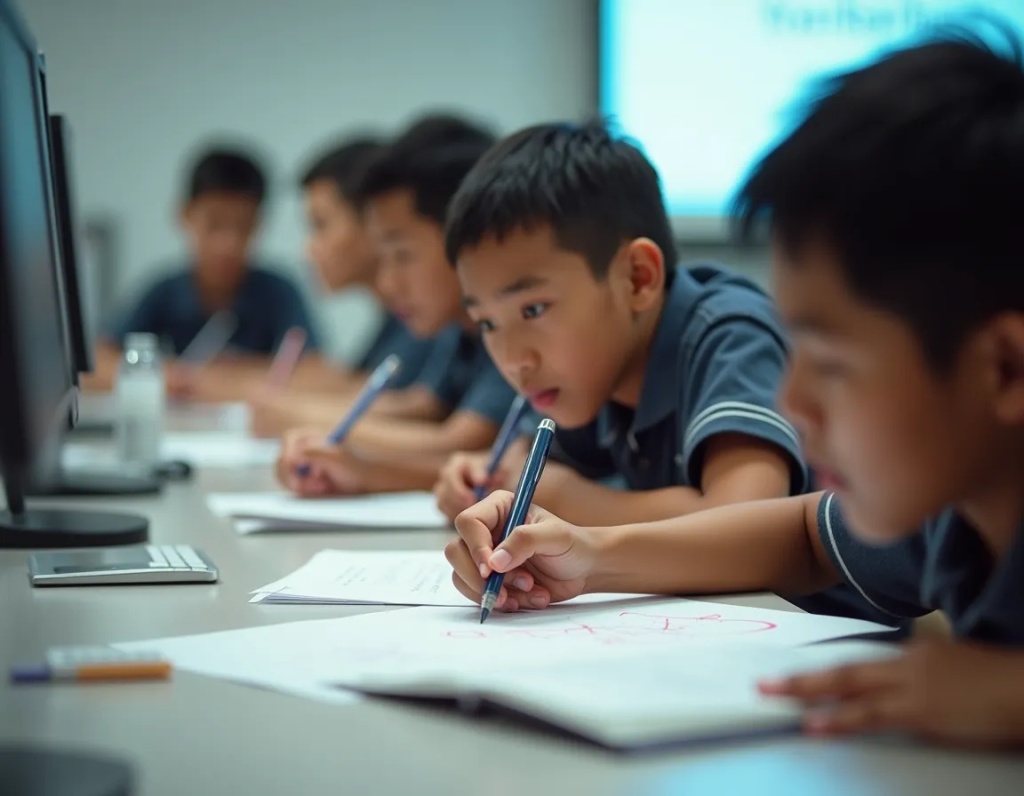
With the rapid advancement of technology, the landscape of education is evolving. Innovative teaching methods are emerging, transforming how students interact with algebra.
Imagine a classroom where virtual reality brings algebraic concepts to life, or AI-powered tutors provide personalized feedback. These technologies are not mere fantasies but are actively being integrated into secondary 1 math tuition. They offer students a dynamic, interactive learning experience, making abstract concepts tangible and engaging.
Another exciting development is the gamification of mathematics. By turning algebraic challenges into games, students can enjoy a playful yet educational experience. This approach not only enhances understanding but also boosts motivation and persistence.
The journey through algebra may be fraught with challenges, but it is also filled with opportunities for growth and discovery. As students ascend this mathematical mountain, they build resilience and confidence, skills that extend beyond the classroom. With the support of secondary 1 math tuition and a commitment to consistent practice, the summit is within reach.
So, what if we viewed each algebraic problem not as an obstacle but as a stepping stone to success? By embracing this mindset, students can conquer algebra with enthusiasm and pride, ready to tackle whatever mathematical adventures lie ahead.